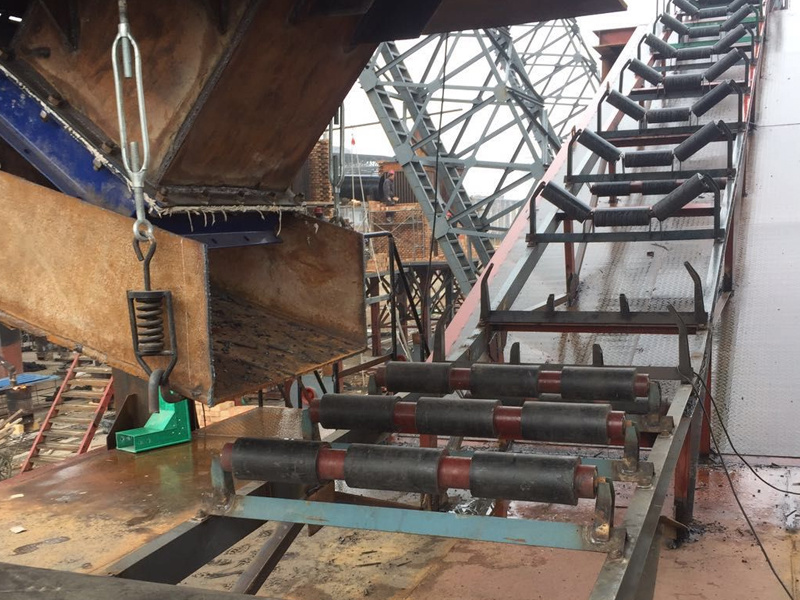
Belt conveyor
Structure: Composed of a drive drum, conveyor belt, idler set, frame, and other components.
Features: long conveying distance, large capacity, and smooth operation; suitable for horizontal or inclined conveying of bulk materials (such as coal, ore, and grain) or unitized goods.
Applications: mining, port operations, power generation, building materials, and other industries.
Roller conveyor
Structure: Composed of multiple parallel rollers, with material conveyed by rolling over the rollers.
Features: simple structure, easy maintenance, and suitable for conveying regular items such as luggage and pallets.
Applications: logistics sorting, warehousing, and production-line assembly.
Chain plate conveyor
Structure: Composed of a chain and chain plates, with the chain plates capable of carrying heavy or high-temperature materials.
Features: high-temperature and corrosion resistance, suitable for conveying heavy or specially shaped items.
Applications: food processing, metallurgy, and the chemical industry.
Screw conveyor
Structure: Consists of a helical screw and a casing; the material is conveyed forward by the rotation of the screw.
Features: Excellent sealing performance, suitable for conveying powdered and granular materials (such as cement and flour).
Applications: construction, food, and environmental protection.
Bucket elevator
Structure: Consists of a hopper, a traction chain (or belt), and a drive unit, used for vertically lifting materials.
Features: small footprint, large lifting height, and suitable for vertical conveying of bulk materials.
Applications: grain processing, chemical industry, and mining.