
Built-in electric roller
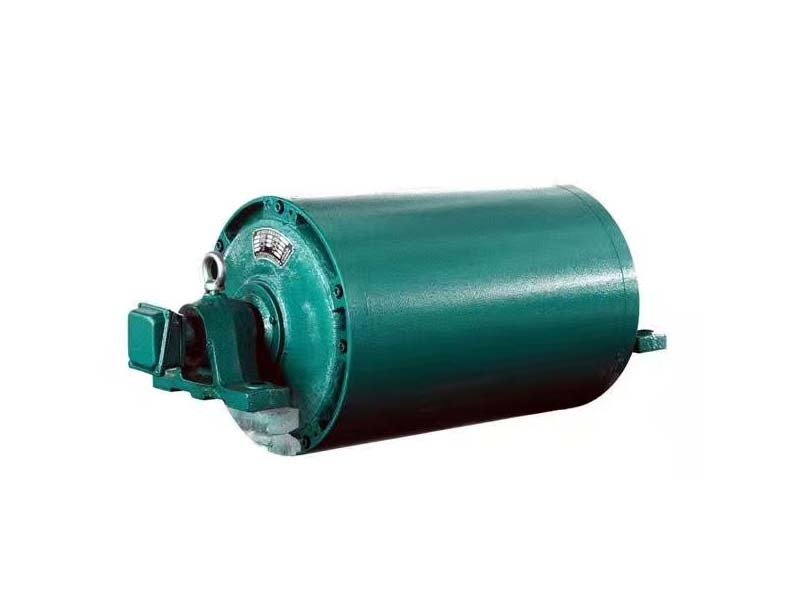
Built-in electric roller
Conveyor rollers are a common type of material-handling equipment, characterized by their simple structure, high reliability, and ease of operation and maintenance. A conveyor roller primarily consists of a drive roller, frame, support brackets, and a drive unit.
Built-in electric roller
• Function of the drive drum: to transmit the torque from the drive unit to the conveyor belt. Drive drums are classified into light, medium, and heavy duty types based on their load-carrying capacity. Each type is available in a variety of shaft diameters and center spans. Drum surfaces may feature smooth steel, diamond-patterned, or herringbone-patterned rubber coverings.
• The return idler (tail idler) is also known as the return roller and is used to guide the conveyor belt back to the drive roller. These tail idlers may be equipped with built-in bearings or mounted in external bearing housings, and are typically located at the end of the conveyor frame.
Conveyor rollers are a common type of material-handling equipment, characterized by their simple structure, high reliability, and ease of operation and maintenance. A conveyor roller system primarily consists of drive rollers, a frame, supports, and a drive unit. Based on the drive mechanism, conveyor rollers can be classified as powered, non-powered, or electrically driven; based on layout configuration, they can be categorized as horizontal conveyors, inclined conveyors, and turn conveyors.
The drive drum is the core component of a roller conveyor, serving to support and drive the operation of the conveyor belt. It consists of a steel tube and bearings and is typically hot-dip galvanized to prevent corrosion. The conveyor belt is the element used in roller conveyors to transport materials and is usually made from materials such as rubber or nylon. Depending on the characteristics of the material being conveyed and the length of the conveying distance, different types and specifications of conveyor belts can be selected.
Technical Specifications for Conveyor Rollers
| Drive Roller (Rollers Head Pulley) (smooth surface or patterned anti-slip surface) | |||
| Conveyor belt width (mm) | Standard drum diameter (mm) | Drum length (mm) | |
| 500 | 500 | The length of the pulley depends on the width of the conveyor belt. | |
| 650 | 500-630 | ||
| 800 | 630-1000 | ||
| 1000 | 800-1150 | ||
| 1200 | 800-1150 | ||
| 1400 | 1000-1350 | ||
| 1600 | 1150-1600 | ||
| 1800 | 1150-1800 | ||
| 2000 | 1350-2000 | ||
| 2200 | 1600-2200 | ||
| 2400 | 1800-2400 | ||
| Materials: | Tail pulley drums are typically made of steel, either low-carbon steel or stainless steel, to withstand the wear and tear associated with continuous operation. |
| Application: | Tail pulleys are used in conveyor systems to provide tension to the conveyor belt and ensure proper belt tracking. They are typically installed at the tail end of the conveyor, opposite the head pulley. |
| Structure: | The tail pulleys are cylindrical with smooth surfaces to facilitate belt operation. They are typically mounted on shafts and supported by bearings. |
Bearing type: | The bearings used in tail pulley drums are typically self-aligning ball bearings or spherical roller bearings, which can accommodate misalignment and axial loads. |
| Drum type: | Tail pulleys come in several types, including standard, heavy-duty, spiral, and winged designs. The appropriate type depends on the specific application and the load-carrying capacity of the conveyor system. |
| Transport packaging: | Tail pulley drums are typically shipped in wooden crates or on pallets to prevent damage during transit. |
| Sample: | Some manufacturers may, upon request, provide samples of tail pulley rollers to help customers evaluate their quality and suitability. |
| Customization: | Tail pulley drums can be customized to suit specific conveyor systems, including dimensions, shaft diameter, and bearing type. |
| Product Series | Drum |
|---|---|
| Applications | Conveyor rollers are a common type of material-handling equipment, characterized by their simple structure, high reliability, and ease of operation and maintenance. A conveyor roller primarily consists of a drive roller, frame, support brackets, and a drive unit. |
| Customization | OEM / ODM, drawing-based production, factory-direct supply and engineering support |
| Source Product ID | Yilin original product 1491458659178692608 |
Product support for OEM & ODM
Drawing-based production, sample confirmation, and custom orders are supported from design to delivery.
Strong production capabilities
Conveyor belts, idlers, rollers, drums, supports, frames, and accessories can be manufactured for industrial projects.
Product quality assurance
Production inspection, packaging checks, and shipment coordination help keep product quality stable.
After-sales support
Our team supports product selection, technical communication, delivery tracking, and after-sales response.
Can I place a small batch order?
Yes. Small batch orders and sample confirmation can be arranged according to the product model and production schedule.
Do you have a pre-shipment inspection procedure?
Yes. Size, appearance, packaging, and key performance items can be checked before shipment.
Can samples be sent before bulk orders?
Yes. Samples can be arranged for testing or confirmation when the product specification is clear.
What information is needed for quotation?
Please send the product model, drawings, quantity, operating conditions, and expected delivery time.
Can you customize products from drawings?
Yes. OEM, ODM, and drawing-based customization are available for conveyor equipment and components.
What is the delivery time?
Delivery time depends on product model, quantity, and customization requirements. Standard products can usually be arranged faster.
Keywords: Drums and Electric Rollers